
Voice Connect
Connect SIP, Teams, Twilio, hosted voice, BYO carrier paths and call routing into workflows that can answer, transfer, join operators and preserve context.
About Vonics
Vonics helps Australian teams answer, route, understand and act on phone calls without replacing the systems they already trust. We connect voice, AI, recordings, transcripts, workflow automation and everyday business apps so every call has a clearer next step.
What Vonics is about
Vonics exists for the businesses where the phone still matters. Trades teams, clinics, service desks, telco operators, security response teams and operations teams all rely on conversations that are urgent, messy and full of context. A caller might need a booking changed, an invoice resent, a job triaged, a support ticket opened or a human reached quickly. Too often, the call ends and the work begins again somewhere else.
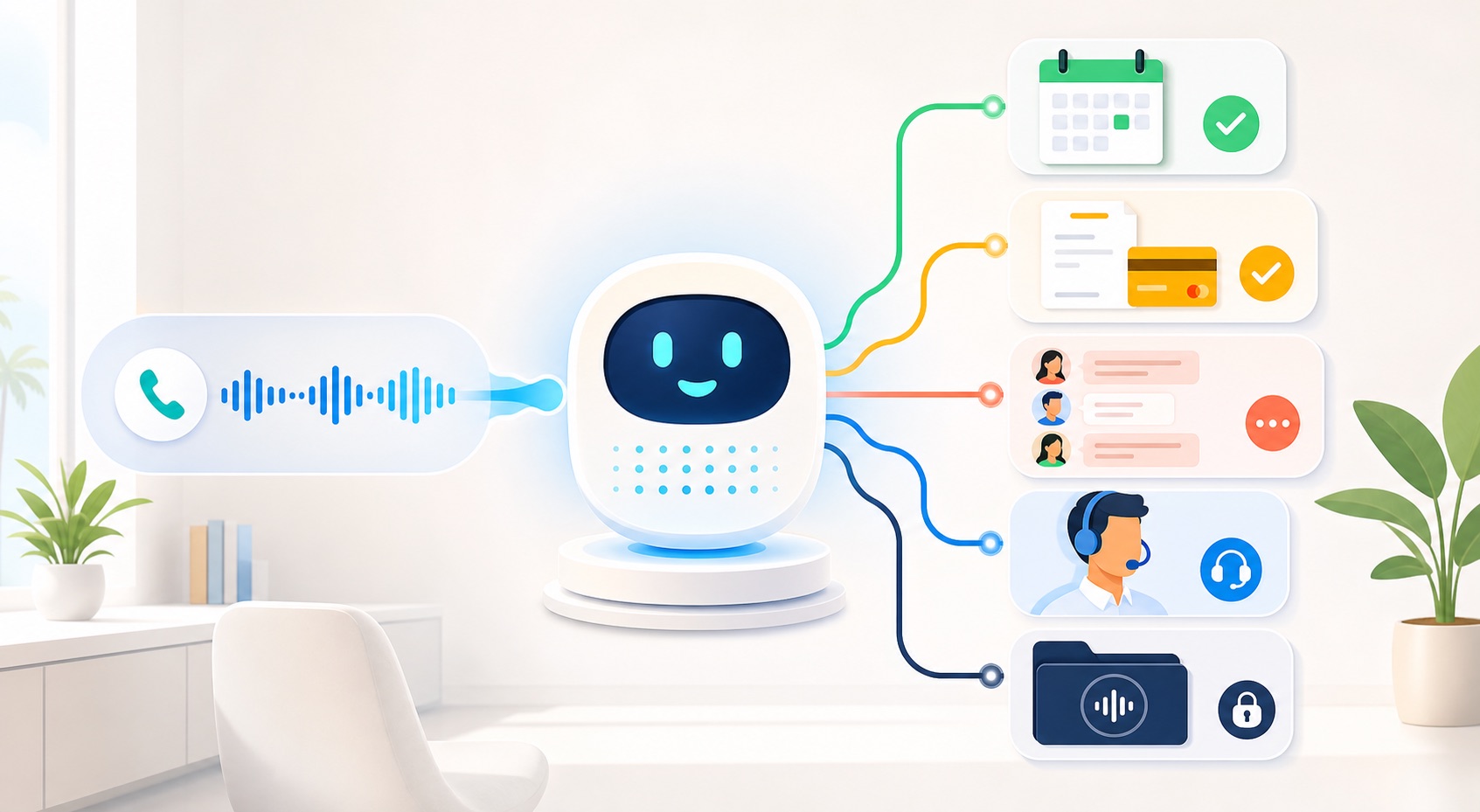
Our platform is designed to close that gap. Vonics can answer calls, capture intent, transcribe conversations, summarise what happened, check approved business context and trigger the next allowed action. That could mean sending an SMS, writing a job note, updating a CRM, checking Xero, escalating into Microsoft Teams, creating a ticket, storing a recording or handing the call to an operator with context already attached.
We are not trying to make businesses throw away their phone stack. Vonics is built to work with the messy reality of modern communications: SIP trunks, hosted voice, PBXs, Teams Phone, Twilio, carrier routing, SIPREC recording, webhooks and the apps already running the business. The aim is to add a useful automation layer, not force a rip-and-replace project before value appears.
We also believe useful AI needs boundaries. Voice agents should know what they are allowed to do, where their knowledge comes from and when to hand the caller to a person. That is why Vonics focuses on workflow blocks, connector permissions, reviewable records, transcripts, summaries and human handoff instead of treating AI as a black box.
The result is a practical operating layer for phone-heavy work: fewer missed opportunities, less retyping, faster follow-up, clearer audit trails and better handover between customers, AI agents and staff.
What we offer
Vonics brings telephony, AI and workflow automation into one place so teams can start with a single painful process and grow into broader operational automation.
Connect SIP, Teams, Twilio, hosted voice, BYO carrier paths and call routing into workflows that can answer, transfer, join operators and preserve context.

Use realtime voice agents to greet callers, collect details, ask follow-up questions, classify intent and route the call based on approved workflow rules.
Trigger actions across SMS, email, Teams, webhooks, booking tools, accounting systems, CRMs, monitoring platforms and support desks.

Capture recordings, SIPREC sessions, transcripts, call summaries, workflow events, escalation notes and the operational evidence teams need later.

Give agents approved sources, connected lookups and explicit fallback paths so automation stays useful without pretending to know everything.
Start from proven patterns for tradies, clinics, helpdesks, telco services, payment reminders, alarm response and other phone-heavy operations.
How we work
We prefer practical first builds over abstract transformation projects. The best Vonics workflow usually starts with a repeatable moment your team already recognises.
We identify who calls, why they call, where the call goes today, which systems hold the answer and when a human must stay in control.
We link the workflow to the right phone path, approved knowledge, connector APIs, notification channels and record destinations.
We measure the useful result: calls captured, summaries sent, tickets created, payments followed up, bookings handled or operators briefed faster.
Our vision
We believe phone automation should be accessible to everyday businesses, not only large enterprises with custom engineering teams. A small clinic, trade company or support desk should be able to automate a real phone workflow without needing to rebuild its entire communications stack.
Our vision is a world where calls do not become bottlenecks, staff do not waste time asking callers to repeat themselves and AI is used with enough structure that teams can trust, review and improve it. Vonics is built for that middle ground: ambitious automation with clear limits, strong handoff and records that show what happened.
Build with Vonics
We will help map the phone path, choose the first useful workflow and connect the systems needed to prove the value.